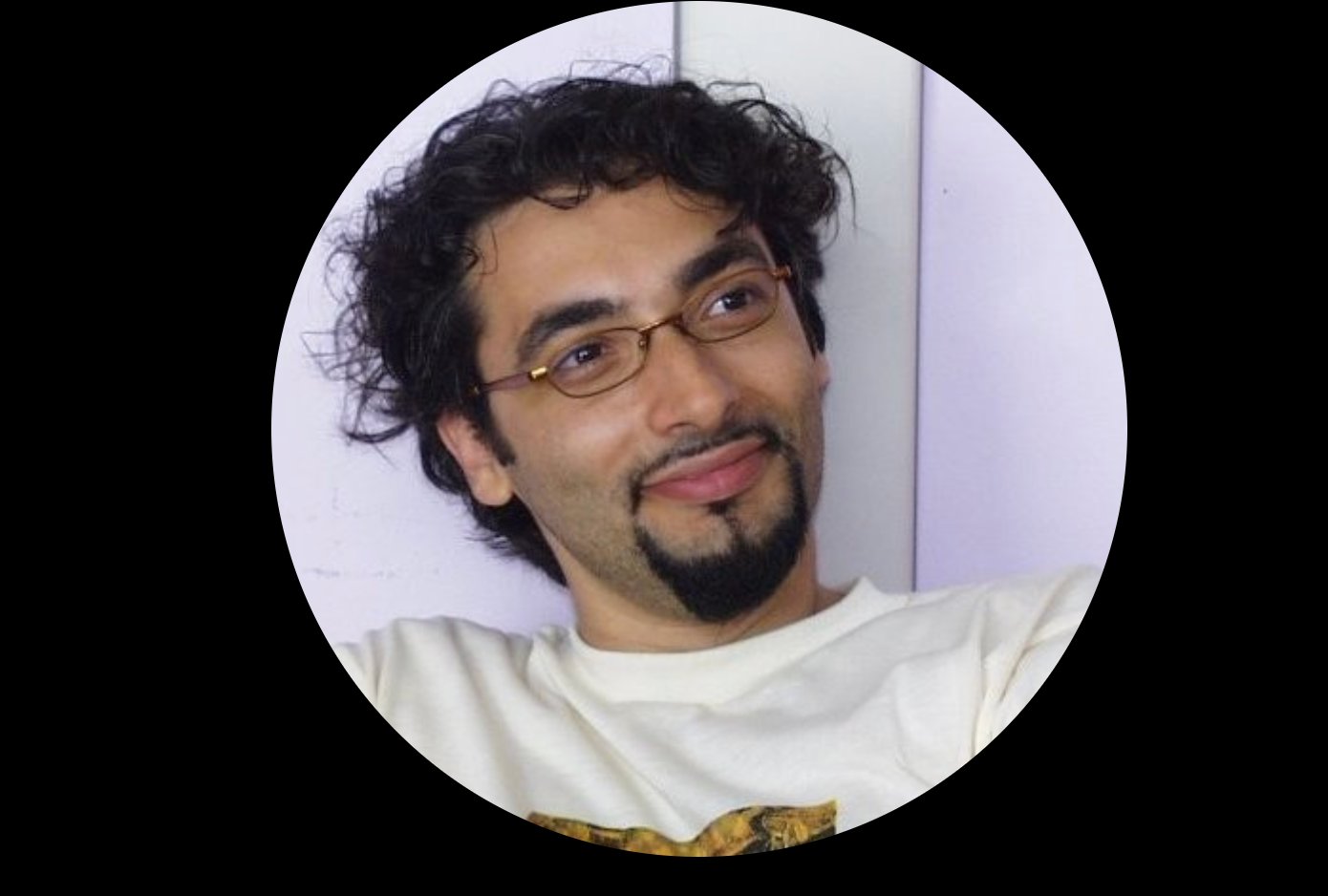
Founder & First Psicomentore
Raised in Milan · Based in Sicily since 2018
Connecting the dots
"You can't connect the dots looking forward; you can only connect them looking backwards. So you have to trust that the dots will somehow connect in your future."
— Steve Jobs, Stanford University Commencement Address, June 2005When I first heard those words, I felt something click. Not immediately — it took years. But standing where I am now, looking back, I can finally see the shape of it.
Chemistry at secondary school, then pharmacy at university. Programming, self-taught from my early teens. A spell in London that changed how I looked at the world. Marketing, design, web development — including advanced studies at MIT. Years in IT and banking cybersecurity. Two years reading psychology in Rome. Then psychiatry, psychoanalysis, neuroscience. And music, always there in the background, never filed under "professional skill."
At the time they felt like scattered threads with no common direction. Looking back, every single one found its place in Psicomentore:
Science & Neuroscience
The scientific rigour I bring to pharmacology, brain biology, and the real limits of psychiatric diagnosis.
Cybersecurity & Privacy
"Radical privacy" isn't a tagline — it's an architecture. Built with the same mindset used to protect banking systems.
Design & Communication
A project about human experience has to feel human. Every aesthetic choice is also an ethical one.
Psychology & Philosophy
The theoretical backbone — from the 4M Model to the twelve philosophical frameworks — comes from years of study inside and outside university.
Music
The Musical Mirrors section isn't a playlist. It's a therapeutic tool, built by someone who listens before he categorises.
Technology
The infrastructure that holds everything else together — written, managed, and maintained from the inside.
None of those dots were mistakes. None were detours. I just didn't know it yet.
Lived experience
For years I lived with psychological distress that touched every part of my life.
I could tell you what happened, when, how, and why. I have no difficulty with that — I'm not ashamed of what I went through. But I'm not going to do it here, and I want to be honest about why: my story is mine alone. It isn't a template. It isn't a map to follow. You need to find your own balance, not replicate mine. And that, in fact, is the entire point of Psicomentore — not ready-made answers, but company along the way.
One thing I will say, because I think it matters: I am not recovered. I don't believe in recovery as the permanent absence of pain, or as a return to some earlier version of yourself that may never really have existed. I've learned to live with it. The swings are still there. What's changed is the capacity to move through them without being swept away. Stability isn't stillness — it's conscious movement.
Why I built Psicomentore
In the hardest years, I reached out for help. Therapy, medication, hospital admissions. Some things helped. Others didn't. The professionals I encountered were skilled — some genuinely excellent. But something was missing that I couldn't name: someone who wouldn't treat me, but would understand me. Not an expert studying me from the outside, but a companion who knew that territory from the inside — because they'd been there.
That person didn't exist. Nobody offered them to me, nobody pointed me in their direction. So I did the only thing that made sense: I imagined them. I built Psicomentore in my mind as the answer to a need that had no name yet.
Only later, through research, did I find that name. In Italy — still underdeveloped — they're called Esperto per Esperienza. In the UK, integrated into the NHS, they're called Peer Support Workers. What I had conjured out of personal necessity turned out to have solid foundations: established evidence, recognised outcomes, and a working tradition in other countries.
I didn't discover peer support by studying it. I built it because I needed it. And I think that makes all the difference.
The first Psicomentore
I am the founder of Psicomentore. I am also — and this is the point I want to make clearly — its first Psicomentore.
I didn't build this from the outside, from behind a desk, from the position of someone observing without having been observed. The guidelines, the Sigillo, the Code of Ethics, the method of accompaniment — all of it was developed from the inside. From lived experience. From having walked that territory before anyone else joined the project.
The goal is for every Italian region to have at least one trained, active Psicomentore. Not replicas of me — people who have passed through their own darkness, with their own authentic story, trained according to the same ethical guidelines and the same Sigillo. The method is shared. The experience is always personal and unrepeatable.
One more thing worth saying plainly: Psicomentore is the time I give to something I believe in — not my livelihood. For that, I continue to work in technology and creative projects. That isn't a minor detail. It means the decisions I make for this project are never shaped by financial logic. Nobody pays me to build it. Nobody who comes here pays for support. I build it because I feel I have to.
The cave
Plato left us a story. People chained in a cave, seeing only shadows projected on a wall and mistaking them for reality. One of them breaks free, climbs out, sees sunlight, and understands that what they had always taken as real was only reflection. Their first impulse — instinctive, generous — is to go back in. To show the others what they have found.
It isn't quite my story. But there is something true in that urgency. When you pass through the dark and find a way out — not the way, but a way — you feel an almost overwhelming pull to go back and say to those still inside: there is a passage here. You can't see it because you're standing in the wrong place. Move two steps to the left. Look from this angle instead.
That isn't arrogance. It isn't any kind of messianism. It's simply that when you find something that helped you stay upright, keeping it to yourself stops feeling like an option.
Psicomentore grew from that. From wanting to offer others what I didn't have. Not out of superiority, but out of reciprocity. Because whoever has left the cave never forgets what it felt like to be inside.
Going it alone
I did try the institutional route. I knocked on doors at Mental Health Departments, spoke with professionals, pursued formal collaborations. The response was mostly silence — or the polite equivalent of it: "let's stay in touch," "we'll revisit this," interests that never turned into anything.
I don't hold it against them. Systems are slow, resistant, bound by their own logic. But I couldn't wait for the system to change. So I took the independent road. Psicomentore was born outside the institutions not out of any anti-establishment ideology, but out of plain practical need. It is a ground-up project, built by hands that have been through what it talks about.
The full story
For anyone who genuinely wants to understand — not out of curiosity, but out of real need — I am preparing a long, detailed podcast. Everything. Moment by moment. No censorship, no rhetoric, none of the narrative tidying that turns pain into a lesson with a neat ending. The full context: the years, the family, the work, the relationships, the crashes, the recoveries, the returns to the bottom. The things that usually go unsaid because they hurt, or because they feel too private.
It won't be on the front page. It isn't designed to be skimmed between notifications. It's a resource for those who want to genuinely understand what it means to pass through the dark — not just read a reassuring summary. It will be public and freely accessible, but tucked away enough to require a deliberate choice. If you want it, you'll find it here when it's ready. Or write to me.
An important note. If you are going through something acute right now — if you are having thoughts of harming yourself — please don't wait for this podcast. Don't wait for me. Call someone now: a friend, a family member, a crisis line. Psicomentore is companionship along the journey, not emergency intervention. For acute crises there are other resources, other lines, other people specifically trained for this. Use them without hesitation.
Tel. +39 393 2089097
(voice calls only)
Email: paolo@psicomentore.org
Web: www.psicomentore.org
"If you want to arrive, you will arrive. The breadcrumbs are here."